Overbite Correction: Understanding Overbites and How Orthodontists Correct Them
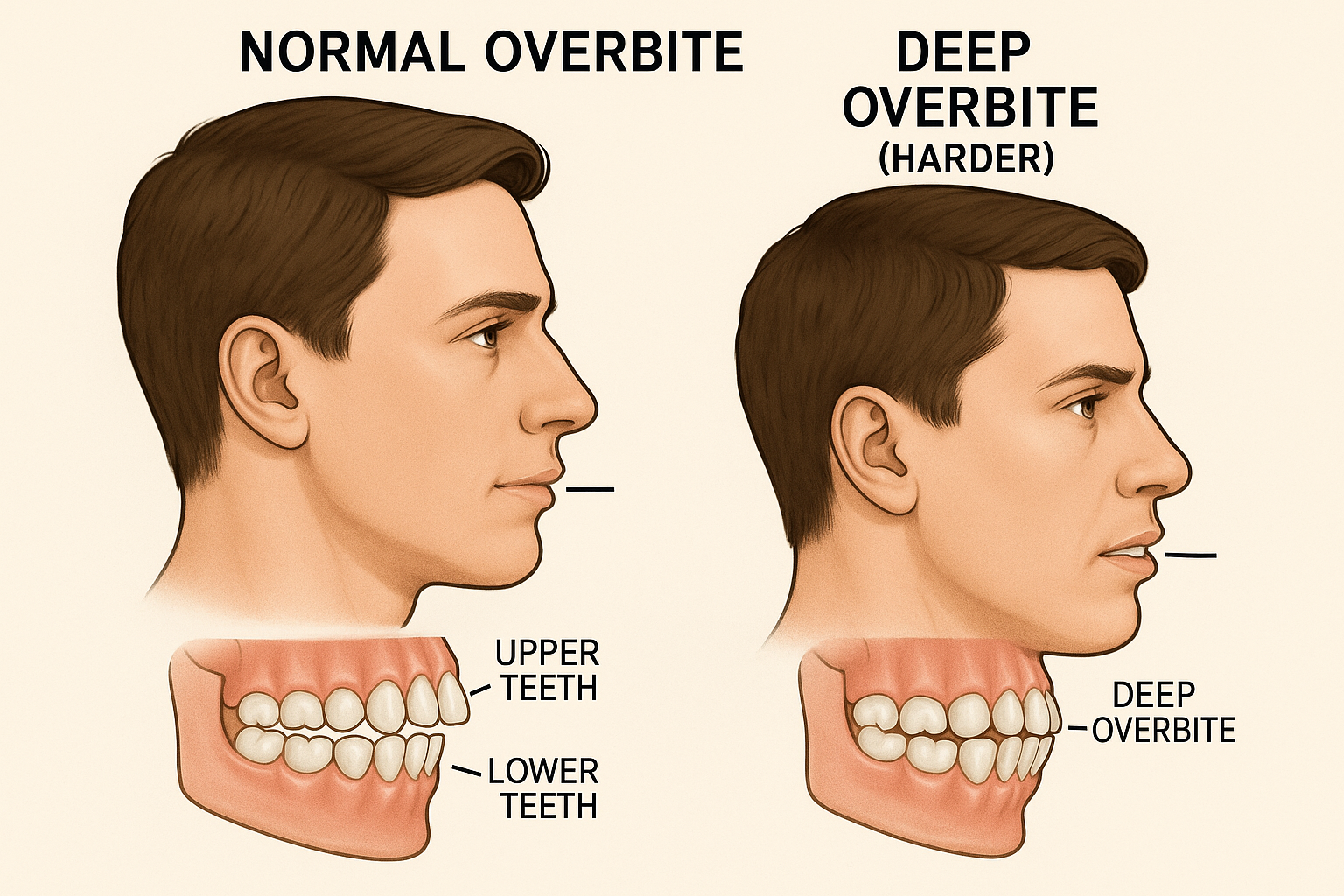
Overbites, also called overjets, are one of the most common reasons patients seek orthodontic care. Studies show that nearly 60% of orthodontic patients in the United States have an overbite. While it’s normal for the upper front teeth to sit slightly in front of the lower teeth, many patients are concerned when their upper teeth stick out too far. Understanding overbite correction is an important step in your orthodontic journey.
Understanding the type of overbite and its cause is the first step toward effective treatment.
Two Types of Overbite
1. Dental Overbite
A dental overbite occurs when the upper teeth protrude too far relative to the lower teeth, but the jaw sizes are normal. One common cause is thumb or finger sucking in childhood, which pushes the top teeth forward and the bottom teeth backward.
Dental overbites can usually be corrected with orthodontic treatment alone, without surgery. Treatment may include:
- Braces or clear aligners to move teeth into proper alignment
- Rubber bands or springs to tip the upper teeth back and the lower teeth forward
- Selective tooth removal if there is crowding or insufficient bone support
Even with normal jaw sizes, if teeth are crowded, aligning them without creating space may result in protrusive teeth. In some cases, removing teeth ensures proper alignment while preserving gum and bone health. When it comes to overbite correction, having the right information makes all the difference.
2. Skeletal Overbite
A skeletal overbite occurs when there is a mismatch between the upper and lower jaw sizes. Most often, this is caused by an underdeveloped lower jaw, rather than an oversized upper jaw.
- Surgery is the only way to truly lengthen a short lower jaw.
- Orthodontists can use a “camouflage” approach for patients who want to avoid surgery, which disguises the jaw discrepancy by moving upper teeth back, lower teeth forward, or a combination of both.
Functional appliances cannot make the lower jaw grow longer than it naturally will, as jaw length is determined by genetics. These devices may help guide the direction of growth or adjust tooth position, but they do not increase actual jaw length.
Treatment Options Based on Severity
Mild Overbites
- Rubber bands from lower back teeth to upper front teeth are commonly used.
- Correction occurs by tipping the upper teeth back and the lower teeth forward without moving the jaws.
- Springs attached to braces can provide a more consistent force for moderate overbites.
Moderate to Severe Overbites
- Upper teeth extraction may be necessary if the overbite is significant or if there is limited bone support in the lower jaw. Removing upper bicuspids allows the upper front teeth to move back without excessively flaring the lower teeth.
- Camouflage treatment may also be used for patients who want to avoid surgery, but some residual overbite may remain.
Why Early Evaluation Matters
Understanding the cause and type of overbite is essential for planning effective orthodontic treatment. At Joe Orthodontics, we evaluate each patient’s teeth and jaw structure to determine the best approach—whether that’s braces, clear aligners, rubber bands, springs, or, in select cases, tooth extraction or surgery.
If you or your child are in Victorville, Hesperia, or Apple Valley and concerned about an overbite, schedule a free consultation today. Our team will create a personalized plan to improve bite alignment, enhance aesthetics, and ensure long-term dental health.